Ujjain Observatory

Sūryamān-Avantikā

"Witness the timeless harmony of stone and celestial bodies. Explore Ujjain’s ancient astronomical heritage, which served as India’s standard time centre for more than two millennia."

Observatory Instruments

The Ancient Observatory of Ujjain

Indian civilization has long been recognized as one of the world's most advanced and intellectually rich civilizations. Throughout history, numerous Indian scholars made invaluable contributions to science and mathematics. Indian astronomers devoted centuries to studying the movements of celestial bodies and the structure of the cosmos, formulating remarkably precise theories that were documented in classical treatises.

Ujjain, one of India's most ancient and sacred cities, has occupied a position of great importance since antiquity. Historically known as Avantikā, it is frequently mentioned in classical texts and has long served as a distinguished centre of knowledge, culture, and scientific inquiry.

Ujjain was regarded as the Prime Meridian (Zero Longitude) of ancient India and served for centuries as a reference point for astronomical calculations. Located close to the Tropic of Cancer, the city offered ideal conditions for observing celestial phenomena. Several influential astronomical treatises, including the Surya Siddhanta and Panchasiddhantika, are closely associated with the scholarly traditions of this region....

Maharaja Sawai Jai Singh II, the Kachwaha ruler of Āmer and later Jaipur, was an eminent scholar, astronomer, architect, and visionary statesman. Deeply passionate about astronomy, he devoted many years to studying Indian astronomical traditions and authored several scholarly works. Between 1728 and 1734 CE, he commissioned the construction of the Vedhshala (Jiwaji Observatory) in Ujjain, which continues to function today as an important scientific and heritage site.

The observatory houses five remarkable astronomical instruments, each meticulously designed to measure specific celestial parameters with exceptional precision. Constructed entirely from stone, marble, and brass, these instruments stand as enduring examples of India's scientific ingenuity, architectural excellence, and astronomical expertise.
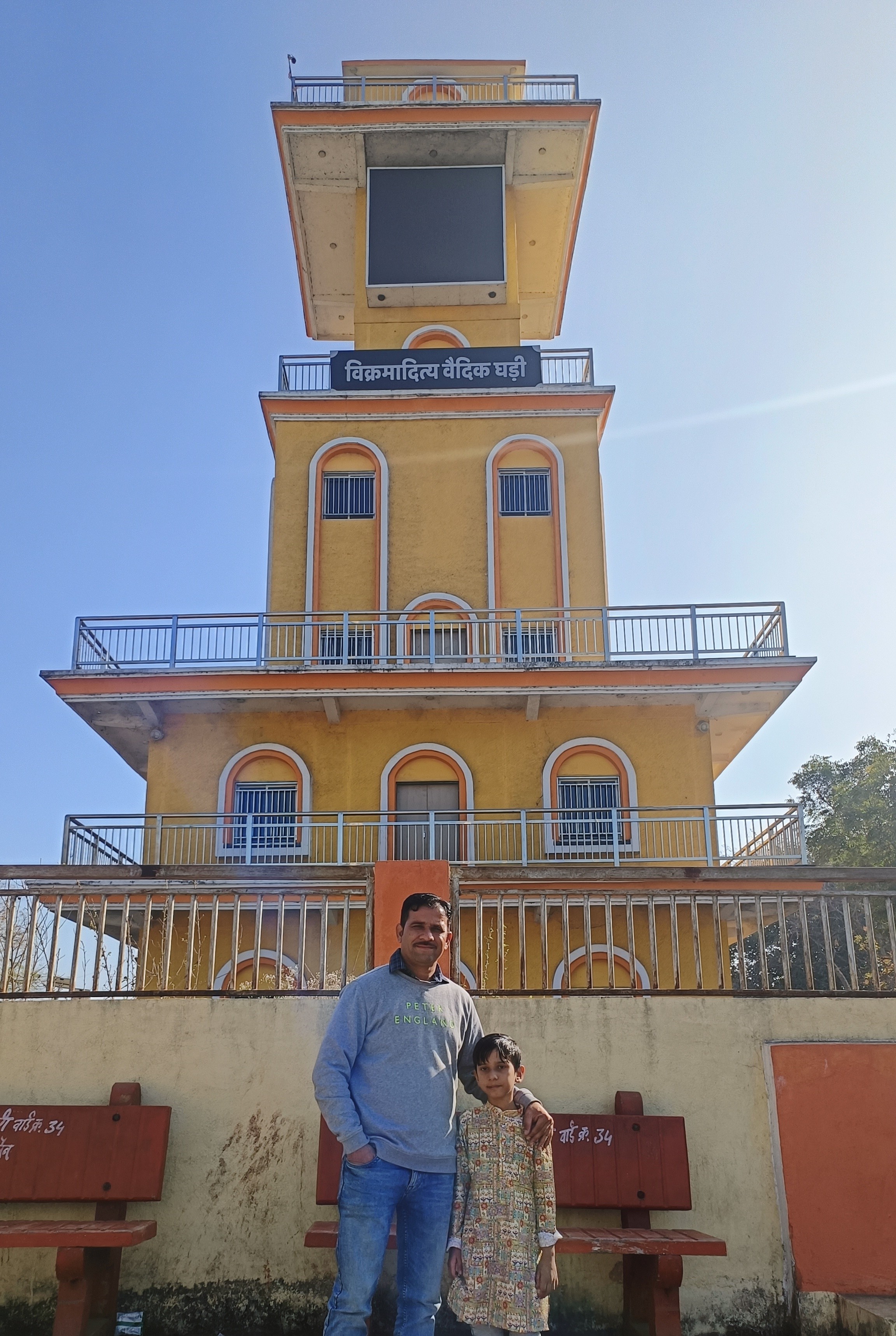
Vedhshala Ujjain

Five instruments of the observatory

Each instrument is a remarkable example of architecture and science — built without electricity, lenses, or modern technology, yet capable of measuring time, latitude, and astronomical positions with extraordinary precision.

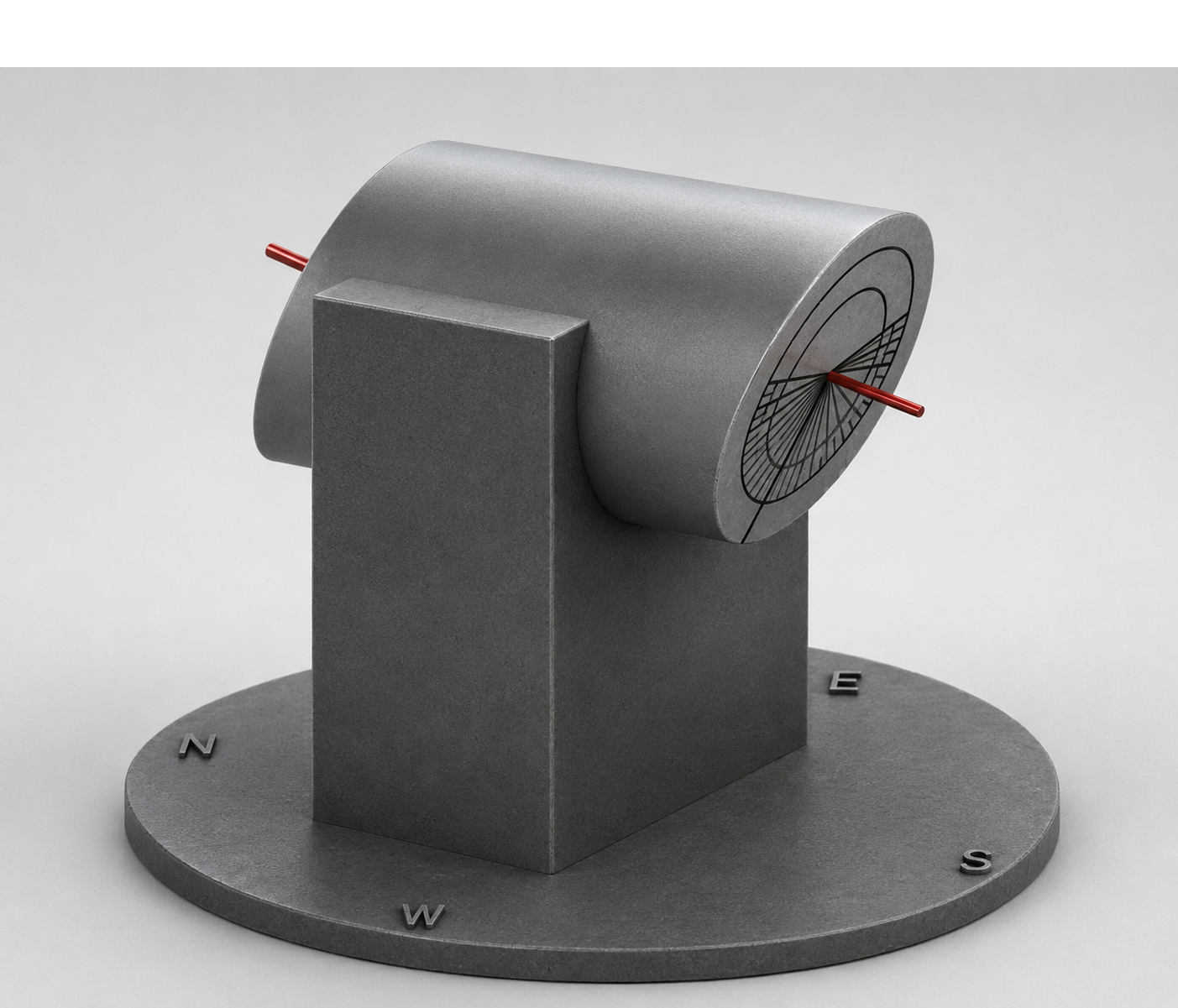
Nadi Valay Yantra
Nāḍī Valaya Yantra
The Equatorial Dial
Measurements: Local Solar Time, Hour Angle, and Solar Declination

This instrument comprises two circular dials aligned parallel to the celestial equator(one oriented towards the north and the other towards the south). As the Sun's apparent path shifts between the northern and southern hemispheres throughout the year, the shadow cast upon the appropriate dial indicates the time. Working in unison, the two dials provide accurate time measurement throughout the year, irrespective of the hemisphere in which the Sun appears.

Explore More
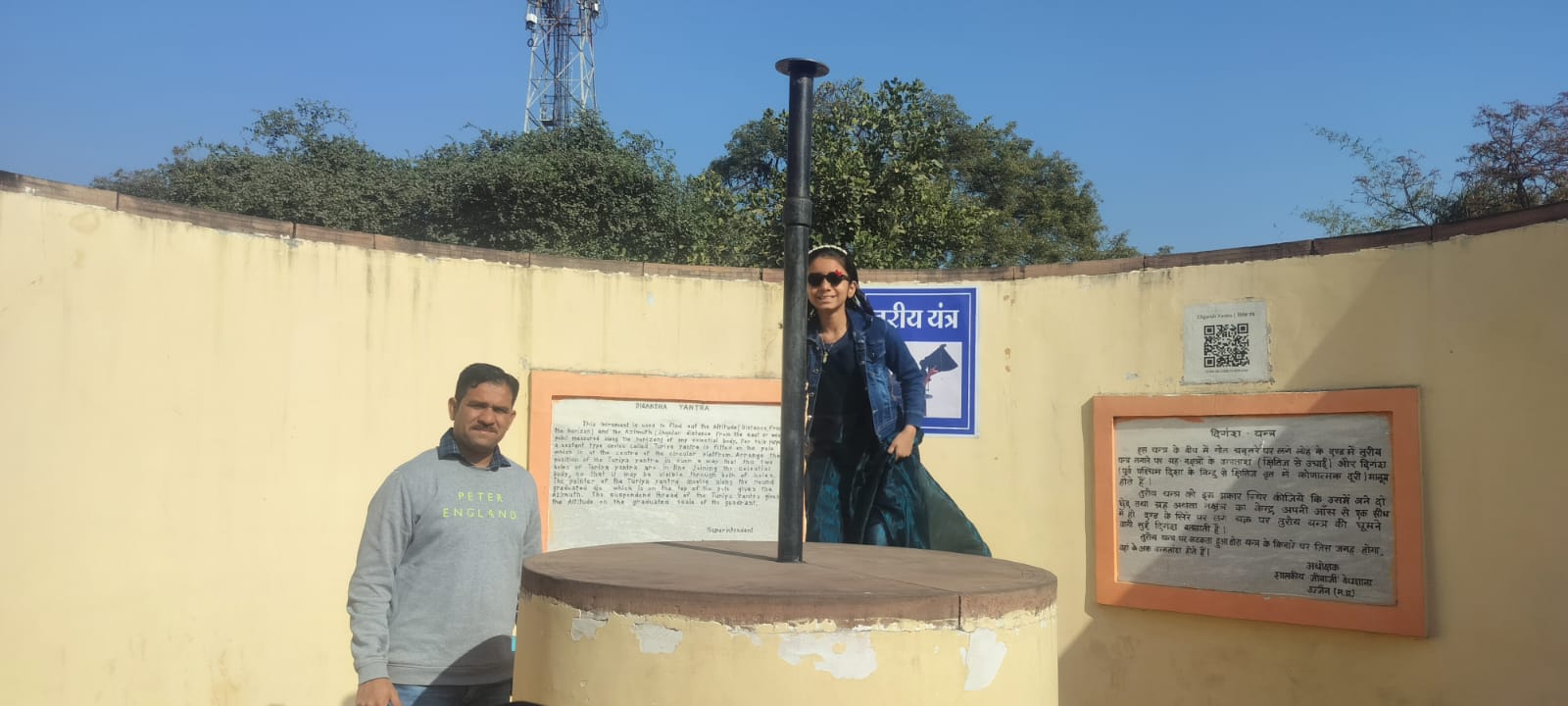
Digansha Yantra
Digaṁśa Yantra
The Azimuth Instrument
Measurements: Azimuth and Altitude of Celestial Bodies

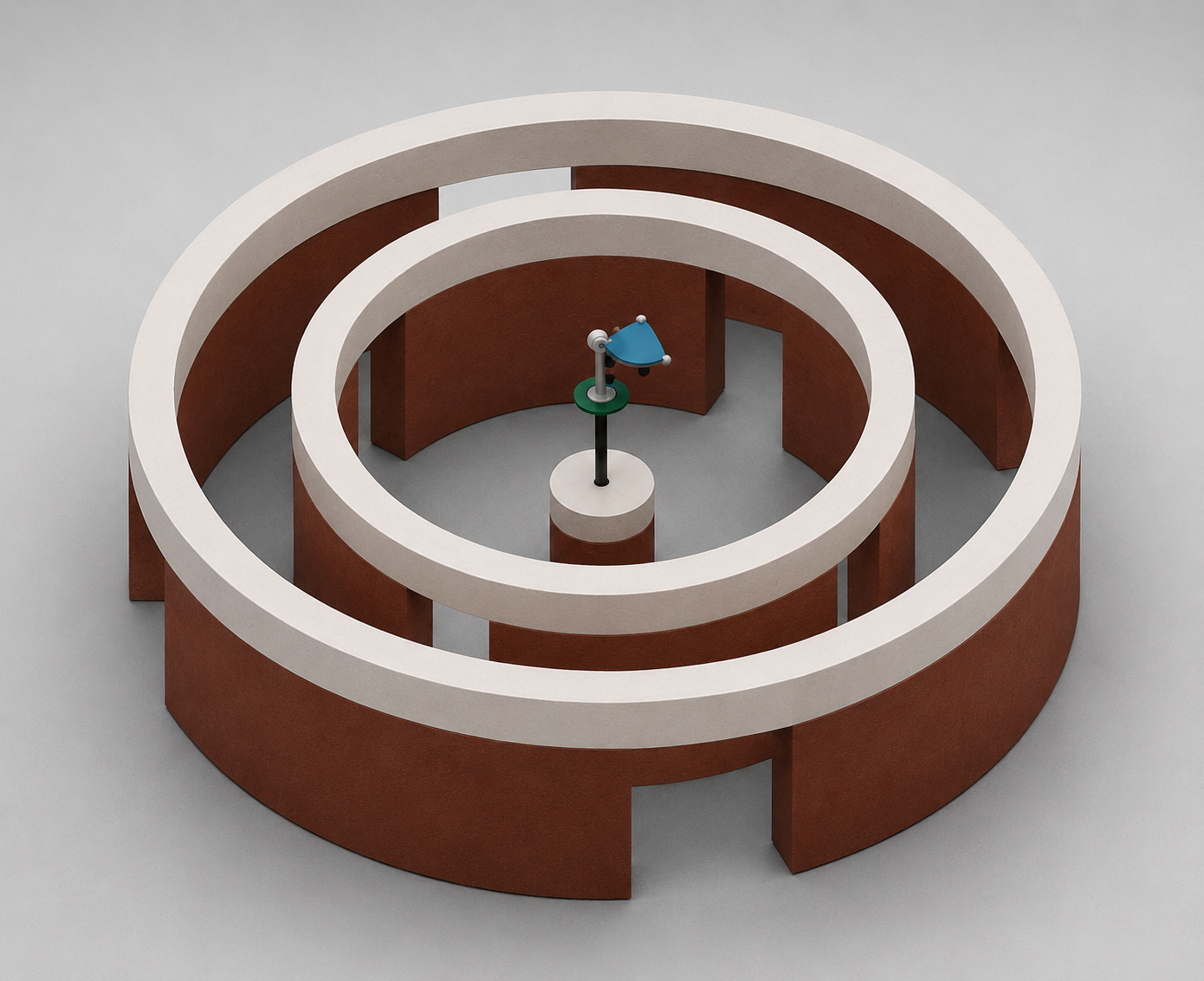
Constructed from two concentric cylindrical walls, this instrument incorporates a vertical pillar at its centre that serves as the Turīya Yantra. Together, this arrangement allows for exceptionally precise measurements of the azimuth and altitude of the Sun, Moon, and stars at any given time, enabling the accurate determination of their positions in the sky.

Explore More
Shanku Yantra
Śaṅku Yantra
The Gnomon
Measurements: The Sun's Tropical Zodiac Sign and Solar Declination

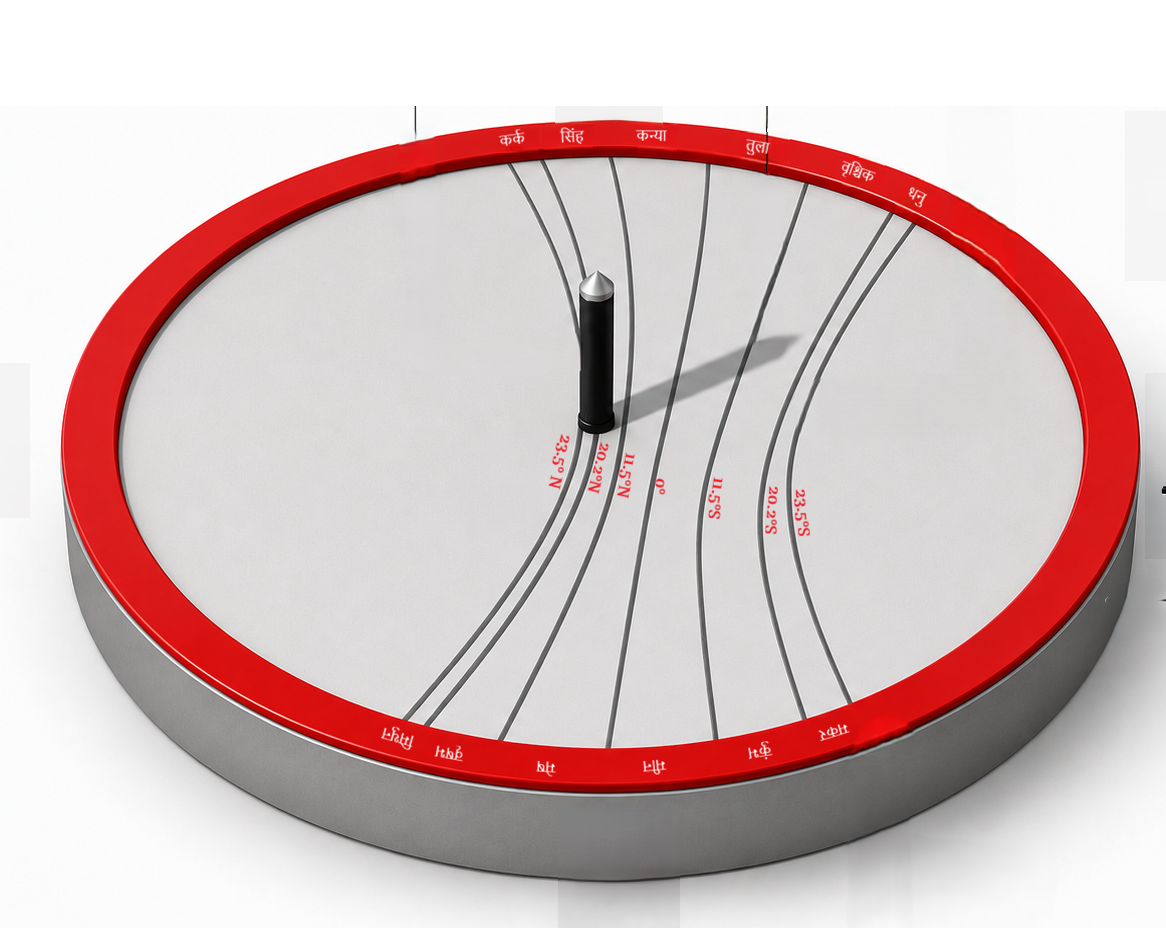
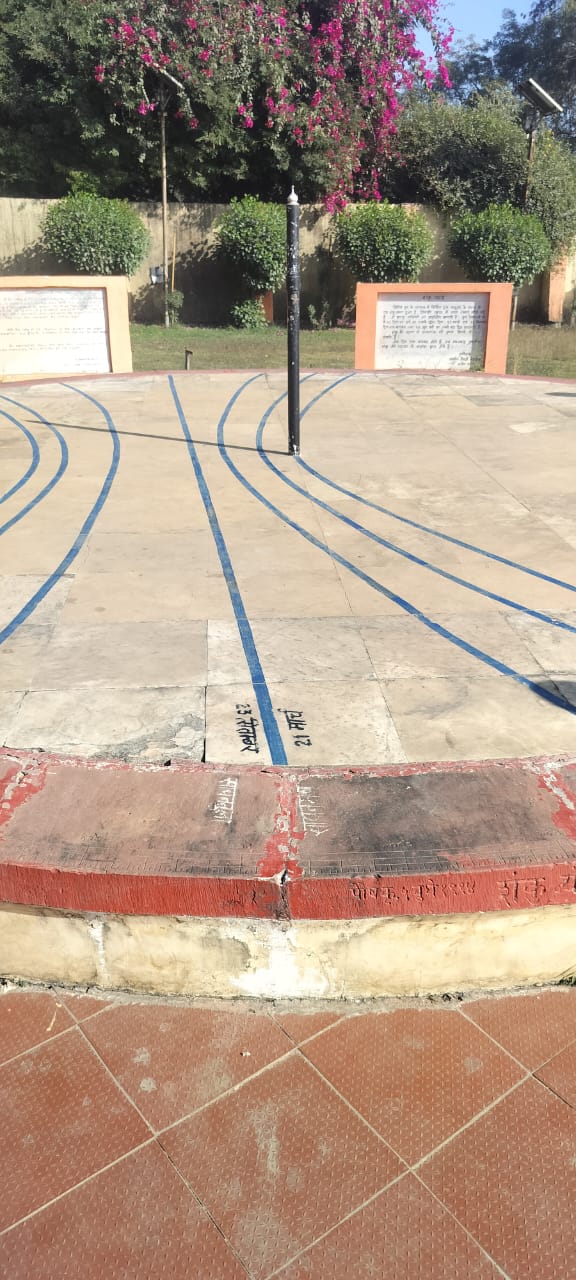
This instrument is a simple yet highly effective vertical gnomon whose shadow falls upon a marked circular platform. By observing the position of the shadow, the Sun's tropical zodiac sign and its declination(its angular displacement from the celestial equator)can be measured with precision. The instrument provides a direct and reliable means of determining the Sun's position in the sky.

Explore More
Samrat Yantra
Samrāṭ Yantra
The Supreme Instrument
Measurements: Local Solar Time, Hour Angle and Solar Declination

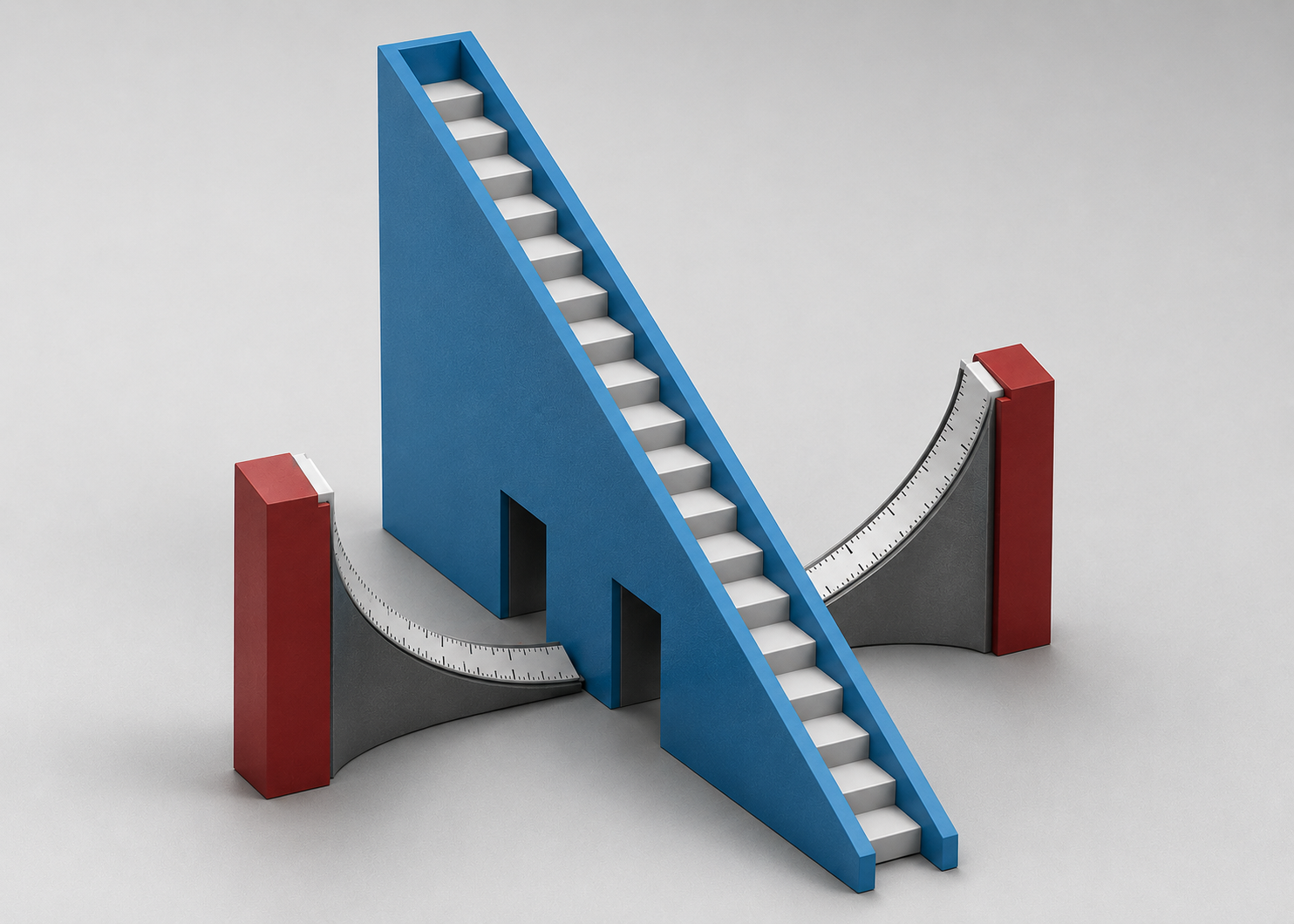
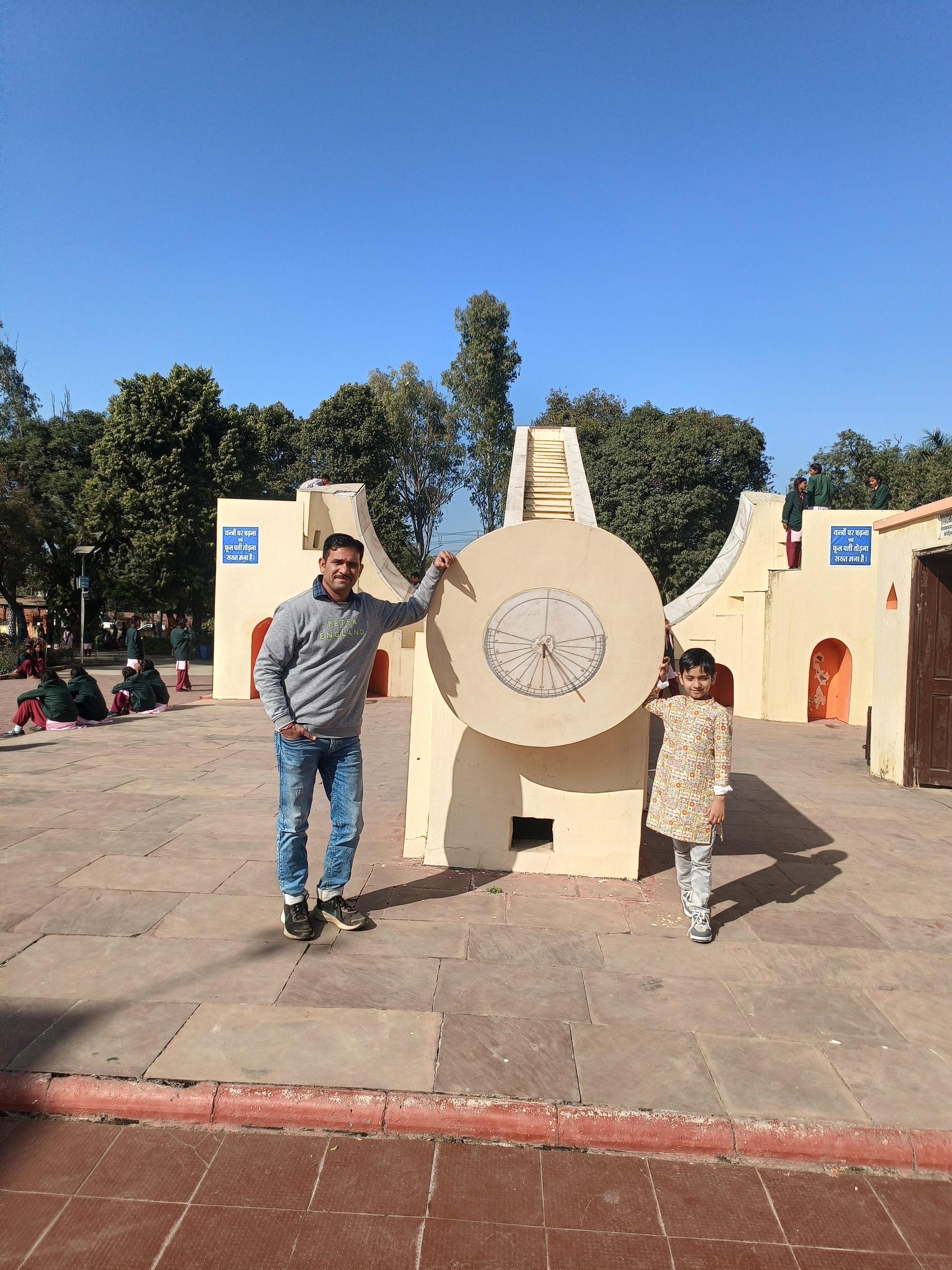
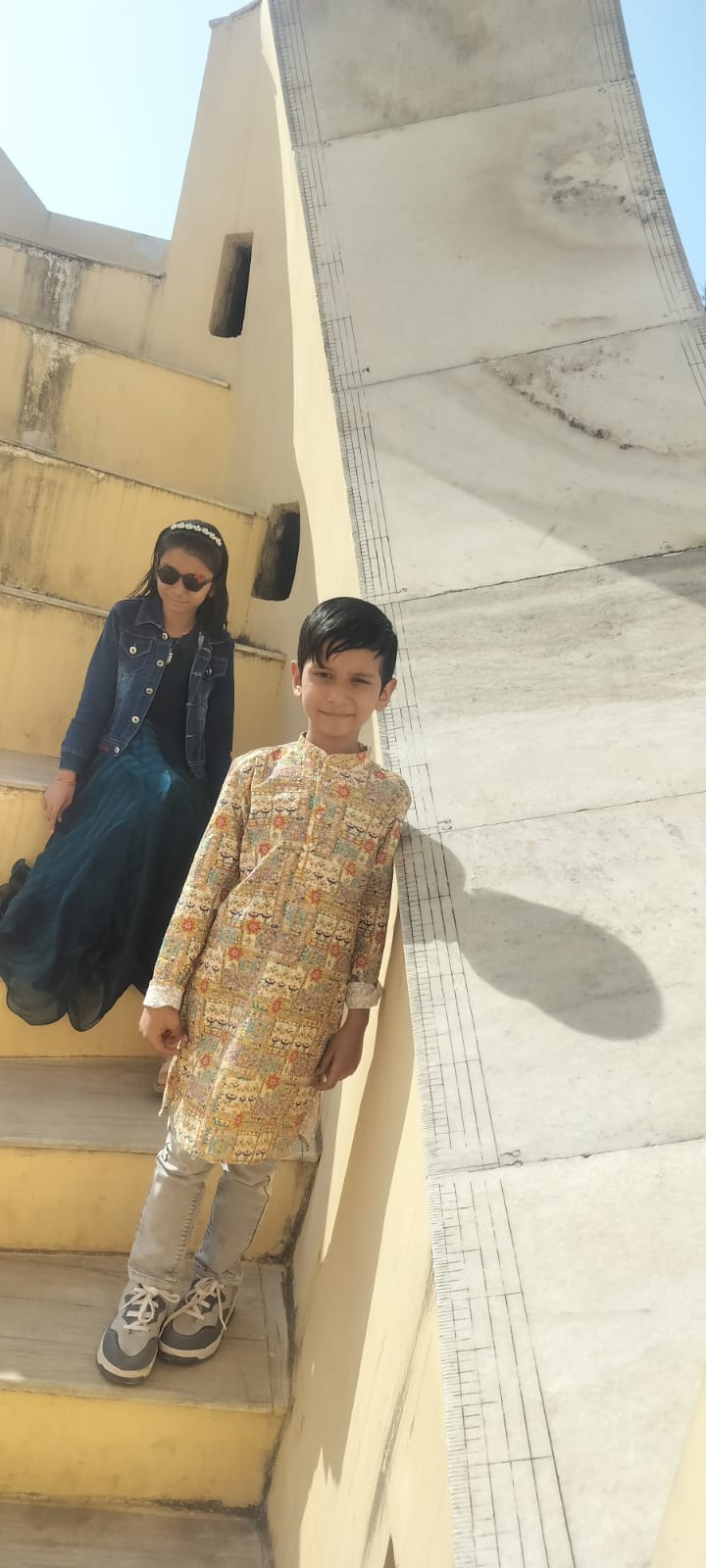
The Great Equinoctial Sundial — This monumental right-angled triangular structure is aligned such that its hypotenuse lies parallel to the Earth's rotational axis. The shadow cast by its central gnomon falls upon two large quadrant arcs, enabling highly precise measurements of local solar time, hour angle, and solar declination. Renowned for its remarkable accuracy, this sundial is capable of measuring time to within approximately 20 seconds(at Ujjain)

Explore More
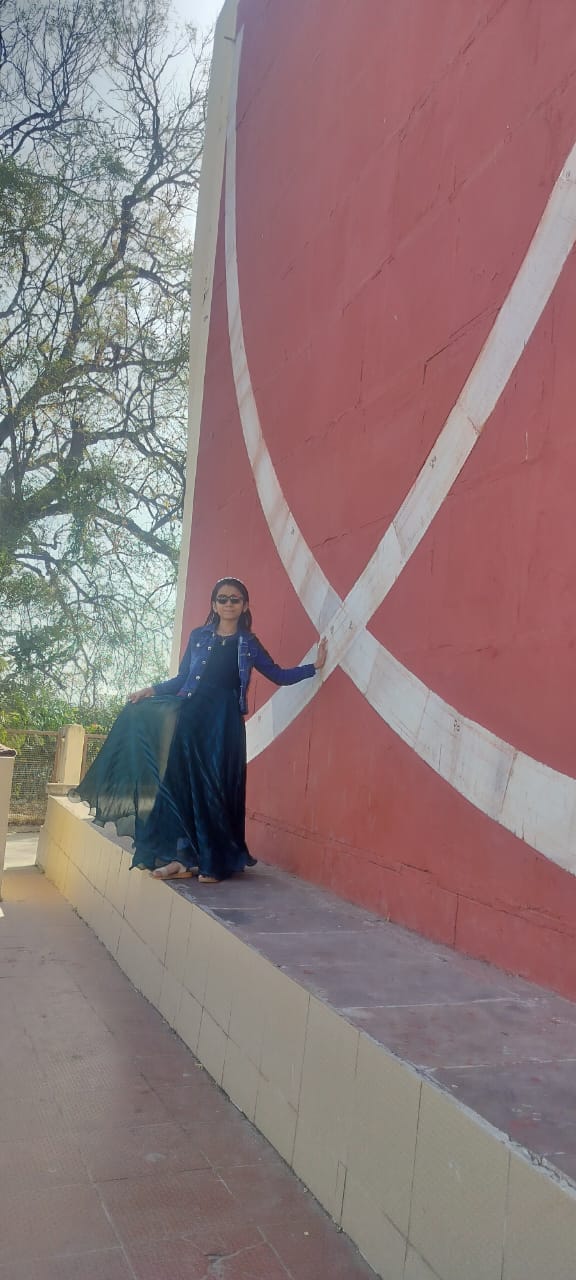
Bhitti Yantra
Bhitti Yantra
The Wall Instrument
Measurements: Zenith Distance and Declination

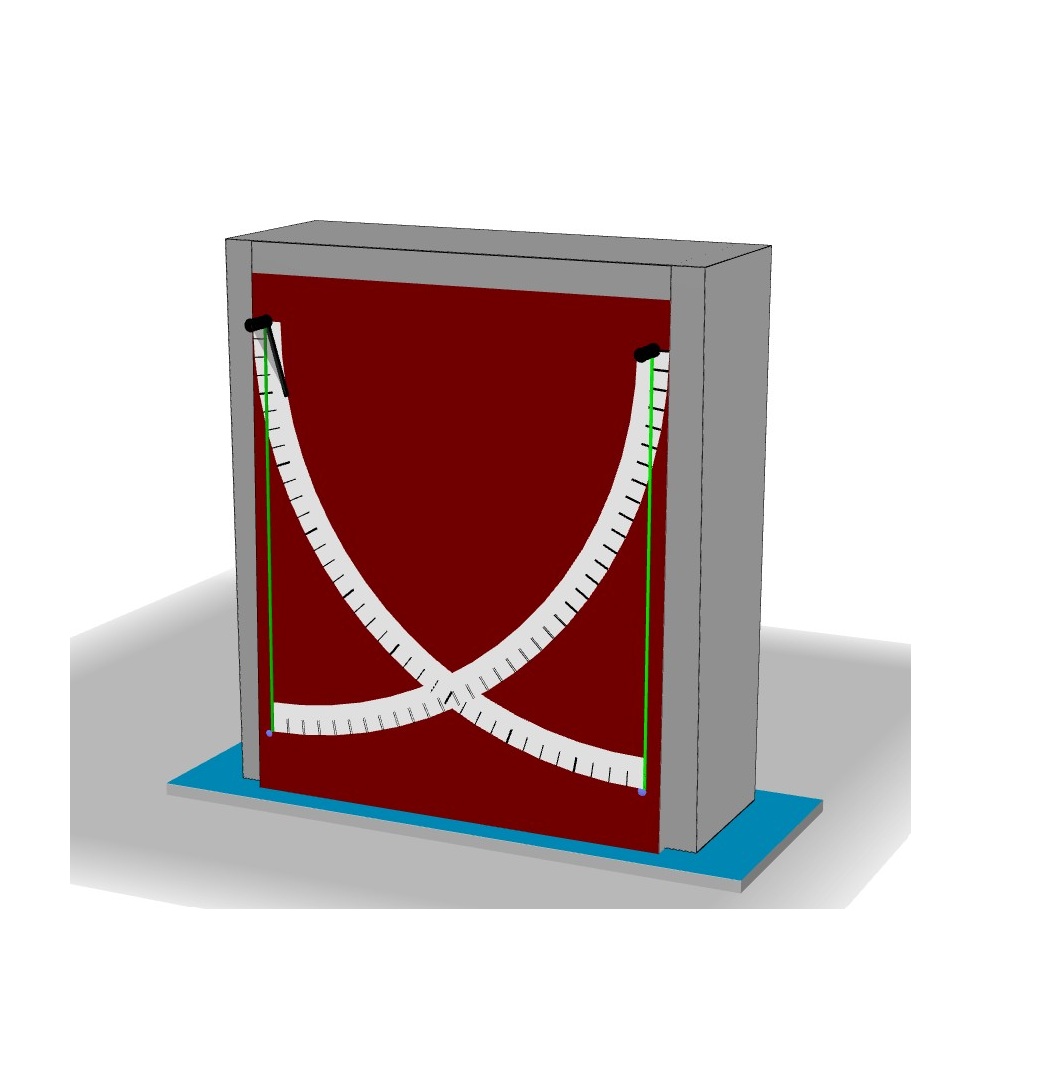
This wall-mounted astronomical instrument was designed for precise celestial observations. By observing the position of the Sun at solar noon and the shadow cast upon its marked surface, astronomers could accurately determine the altitude, zenith distance, declination, and other important astronomical parameters of celestial bodies. The instrument stands as an outstanding example of the computational sophistication and scientific precision achieved in ancient Indian astronomy.

Explore More

Why Ujjain?

Ujjain is no ordinary city. For more than 2,000 years, it served as the reference point for astronomical calculations across India—the 'Greenwich' of the ancient Indian world.

23.1793° N
Tropic of Cancer
Ujjain lies very close to the Tropic of Cancer, making it an ideal location for solar observations and exceptionally important for the calibration of astronomical instruments.
Ancient Prime Meridian
Ancient Indian astronomers used the meridian passing through Ujjain as the Prime Meridian (Zero Longitude), making it the reference line for astronomical calculations throughout the Indian subcontinent.
1728–1734 CE
Year Built
Maharaja Jai Singh II commissioned the construction of this observatory between 1728 and 1734 CE as part of his ambitious initiative to refine the astronomical tables used throughout India.
5
Precision Instruments
Five remarkable instruments, constructed from stone, marble, and brass, were designed to measure specific astronomical parameters with exceptional precision (without lenses or electronics, relying solely on geometry and shadow).
20 s
Time Accuracy
The Samrāṭ Yantra at Ujjain can measure local solar time with an accuracy of approximately 20 seconds—an extraordinary achievement for a stone instrument built more than 300 years ago.
2000+
Years of Astronomy
Ujjain's astronomical tradition predates the Jantar Mantar observatories by more than 2,000 years and is referenced in numerous classical texts, including the Surya Siddhanta (c. 400 CE).

Learn Through Video

Astronomical Instruments
A documentary showcasing the remarkable astronomical instruments of Jiwaji Observatory, Ujjain.

Visit Ujjayinī Vedhshala

Location
Gaughat, Chintaman Road, Jaisinghpura
Ujjain, Madhya Pradesh 456010, India
Visiting Hours
Monday – Sunday
9:00 AM – 5:00 PM
Closed on National Holidays
Best Time to Visit
October to March offers the most pleasant weather.
Sunrise and solar noon are ideal for observing the instruments in operation.

Project Overview

Introduction

Your Name
Jitendra Sahebrao Suryawanshi
Assistant Professor ( Physics )
About me

I am Jitendra Suryawanshi, an Assistant Professor of Physics in the Department of Higher Education, Government of Madhya Pradesh, India. My academic and professional interests encompass the integration of technology in education, the development of virtual laboratories, and research in the field of thin-film technology. I have also been actively engaged in various national and international academic activities that promote scientific learning, innovation, and interdisciplinary collaboration....

This website, dedicated to the Ujjain Observatory (Vedhshala), has been developed with the objective of preserving, promoting, and disseminating the rich heritage of the Indian Knowledge System (IKS) and the longstanding traditions of Indian astronomy. This initiative has been profoundly inspired by the invaluable contributions and scholarly work of Mr. Lokendra Singh Chouhan from the Regional Institute of Education, Bhopal, Madhya-Pradesh, India.

The platform integrates interactive simulations developed by me for several historical astronomical instruments of the observatory, along with scientific analyses and educational resources compiled from authentic books, historical records, and peer-reviewed research publications. By leveraging modern technological tools, this initiative seeks to present India's astronomical knowledge tradition in a scientific, authentic, and accessible manner for students, researchers, educators, and the general public.

The foundation of my life and work is deeply rooted in the values imparted by my late father, Mr. Sahebrao Suryawanshi. His teachings instilled in me discipline, integrity, and an enduring commitment to the pursuit of knowledge. He inspired me to believe that education is not merely a means of acquiring knowledge, but also a responsibility to create meaningful and lasting contributions for society and future generations.

This website is a humble endeavour to preserve, document, and reinterpret India's scientific and cultural heritage in contemporary contexts, ensuring that this invaluable legacy remains accessible, relevant, and inspiring for generations to come.

📚 References
  • Kaye, G. R. (1920). A Guide to Old Observatories. Superintendent Government Printing, Calcutta, India.
  • Magruder, K., & Keas, M. Basic Celestial Phenomena: An Introduction to Observational Astronomy (Ecliptic, Celestial Equator, Zodiac).
  • Modeling the Paths of the Sun Using GeoGebra — North American GeoGebra Journal, Vol. 8, No. 1, ISSN 2162-3856.
  • Losada Liste, R. (2007). GeoGebra: la eficiencia de la intuición. Gaceta de la Real Sociedad Matemática Española, Vol. 10, Issue 1.
🏛️ Project Credits
  • Site Design and Production :
    Jitendra S. Surawanshi
    Website concept, design, development, interactive geoGebra based simulations, scientific visualizations, educational content development, and project coordination.
  • Research and Content Development :
    Scientific interpretations and educational material developed using authentic books, research papers, and historical references related to Vedhshala (Jiwaji Observatory), Ujjain.
  • Image and Media Production :
    Original images, diagrams, graphics, digital media, and interactive simulations developed by the author. Selected illustrative images were created with the assistance of Artificial Intelligence (AI) tools and adapted for educational purposes.
🎥 Video Credits
Contact
✉ jitusury@gmail.com 8827970700 📍 Sendhwa, Madhya-Pradesh (INDIA) Instagram